Madison Cullinan
READING TIME: 3 MINUTES
For decades, student affordability has been a challenge; in the years since the global pandemic, it has been classified as a crisis. The student affordability crisis is the alarmingly high financial strain placed on post-secondary students. There are many reasons behind this crisis, but a few key ones include lack of student housing, low student employment rates, and increases in prices for residence and tuition. This is making university widely unaffordable for many post-secondary students across Canada.
There are a few solutions to these issues. Regarding housing, there needs to be increased access to student buildings. Currently, there is not enough housing, and the housing that does exist is often not a healthy living environment for students. New housing, or expanded pre-existing residences, need to be both good quality and within student budget. No student should have to choose between rent and groceries; yet, in the midst of this crisis, this scenario is becoming more and more common. There is also a desperate need for more student jobs. Lack of work is a key factor behind many Canadians being unable to attend university. Post-secondary education also needs to become more affordable, and a major part of that is having more government grants and bursaries available for students. As student affordability is not a new issue, but a growing one, there are organizations advocating for students across Canada in the face of this crisis.
The Canadian Alliance of Student Associations, or CASA, is a national organization representing university students. Post-secondary student associations across the nation work together to make up this highly accomplished organization. According to their website, CASA “is a non-partisan, not-for-profit student organization composed of student associations from across Canada”. This organization listens to students across Canada, hearing out their struggles with our post-secondary systems, before working to convince the federal government to take action. Recently, CASA has been bringing awareness to a variety of different issues, such as the rise of student homelessness and large rates of youth unemployment.

(Canadian Alliance of Student Associations)
Wondering how you can stay up to date and get involved? Follow CASA on Instagram at @casaacae and follow along with their updates. Earlier this month, CASA posted addressing possible cuts regarding Canada Student Grants, which they argue are “one of the most effective investments the federal government makes”. While currently students can receive up to $4,200 per year from CSG, this funding may be reduced to $3,000 – a drop that CASA claims will leave 700 000 Canadian post-secondary students with “a significant cut in financial support during a time of cost-of-living crisis”. However, this cut in funding has not yet been confirmed; there is still time to make your voice heard. Follow the link in their bio to sign the official e-petition and resources for writing your member of parliament.
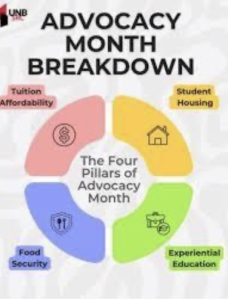
The University of New Brunswick’s Student Council is one of many student associations that make up CASA. UNBSRC’s four pillars for advocacy during the 2025-2026 academic year, according to their New Brunswick Student Priorities document, are Tuition Affordability, Student Housing, Food Security, and Experiential Education/Employment – all major aspects of student affordability.
(@unb_src on Instagram)
Over the past year, our SRC advocacy team has participated in CASA events, Maritime Student Congress, and multiple other conferences to advocate for UNB students’ priorities. SRC programs such as free bus passes and gas gift cards, as well as the food pantry and breakfast program, also help out when it comes to different issues relating to student affordability. During advocacy month in November 2025, the SRC posted weekly to their Instagram expressing in detail the current issues behind each of their four pillars of advocacy, as well as their intended goals for each of them. The SRC has increased their interest in student affordability in recent years, and it shows in the vast amount and variety of information they share regarding their advocacy goals and accomplishments.
While student affordability is a growing and ever-changing crisis, find comfort in the fact that both UNBSRC, as well as CASA on a national level, are advocating for student concerns. Make sure to get involved, and speak up when it comes to affordability-related concerns.
SHARE