Khushi Chauhan
READING TIME: 6 MINUTES
Whenever the topic of international students comes up in Canada, the conversation shifts almost immediately from policy to blame. You can see it in comment sections under news articles, in TikTok videos, on Reddit threads, and even in political debates. There is a growing belief that international students, especially Indian students, are responsible for the housing crisis, job shortages, and the supposed decline of Canadian culture. What stands out is how normal these reactions have become, even though they are built on assumptions that fall apart when examined against actual evidence.
What most people do not acknowledge is that this backlash did not start with students. It started with government policy. For years, the Canadian government encouraged large numbers of students to come here. They expanded study permit allowances, promoted international immigration pathways, and relied heavily on international tuition to stabilize universities financially. According to Statistics Canada, international students contributed more than 22 billion dollars to the Canadian economy in 2022, making them one of the largest revenue sources for the post-secondary system.

Moshiur Samid, an international student at the University of Regina, says he
and two friends were subjected to racist insults and threatened while walking
home from a 7-Eleven in December. Samid says one of the men threw coffee
at him. (Submitted by Moshiur Samid)
Universities, after facing years of provincial funding cuts, leaned even harder into international recruitment. Many now depend on international tuition, which can be four to five times higher than domestic rates, to keep basic operations running. In other words, the system was built to attract international students. It benefited from them. It depended on them.
Now, with rising public frustration and political shifts, the same students Canada invited are treated as national problems. Instead of questioning the policies that created this dependence, many people direct their frustration at students who had no control over how the system was designed.
Migration scholars call this dynamic “instrumental inclusion and symbolic exclusion”. Dr. Melissa Merry describes it as a pattern where states “welcome immigrants for economic gain while treating them as outsiders when public sentiment changes”. You can see this clearly in Canada. When labour shortages were high, the message was “Canada needs you”. Now that economic anxiety has increased, the message has shifted to “there are too many of you”.
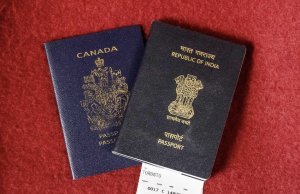
The Varsity/Website
The Job Myth
One of the most common complaints online is that international students “steal jobs”. This idea keeps popping up, even though labour economists have repeatedly disproven it. A 2023 study from the Canadian Labour Market Information Council found no evidence that international students displace Canadian workers. Instead, they tend to work in sectors that struggle to find local employees, including retail, hospitality, and food service.
Economist Jennifer Hunt explains this simply: “Immigrant workers often expand the labour market in ways that create additional jobs rather than reducing them.” If an international student gets a job, it is because they applied for it and earned it. The idea that they took a job someone else was entitled to is not how employment works.
Yet the myth persists because it is easier to blame visible newcomers than to analyze structural economic issues.
The Housing Myth
Another popular claim is that international students caused the housing crisis. This is repeated so often online that many take it as fact, but housing experts disagree. The Canadian Mortgage and Housing Corporation has stated multiple times that the crisis is the result of decades of under-building, investor speculation, restrictive zoning, and stagnant wages.
International students do create additional rental demand, but they did not create the structural issues. Blaming them is convenient because it avoids addressing the complex realities behind the housing market.
Whose Culture, Exactly?
A more subtle but equally harmful argument is that international students are “changing Canadian culture” in a negative way. This is where the racism becomes obvious, even when people try to disguise it as a cultural concern.
The group receiving the most backlash today is Indian students, which is not surprising. Migration researchers note that hostility often arises when one visible group becomes numerically larger, even when they pose no threat. Indian students now make up roughly 40 percent of all international students in Canada. Their presence is more visible, which makes them easier to target.
But visibility does not equal harm. What it does reveal is how quickly cultural anxiety can turn into racial gatekeeping.
No one chooses their skin colour. No one chooses their birthplace. The only reason someone is considered “Canadian” and someone else is called a “foreigner” is geography and timing, not merit. Yet this basic truth gets lost when people frame immigration as a cultural invasion.

Rowba Mohamd and Uzma Bhutto are part of the team at the Coalition of Muslim Women of KW. The organization has been at the forefront of local efforts standing up to hate, discrimination, Islamophobia, and gender-based violence in Waterloo region. (Doug Coxson/CambridgeToday)
What Students Actually Experience
While my own experiences with racism in Canada have been mild, many international students have documented far more difficult encounters. In 2023, a national survey by the Canadian Bureau for International Education found that 62 percent of international students reported experiencing discrimination based on their ethnicity or accent. Students shared stories of being told “go back to your country”, facing landlord discrimination, and being assumed to be cheating or working illegally simply because of their background.
On social media, countless students describe being rejected from rentals the moment landlords hear their accent or see their name. Others talk about customers refusing service from them in part-time jobs. These experiences do not represent every interaction, but they show how quickly stereotypes shape daily life.
These stories matter because they counter the narrative that international students are simply “overreacting”. The discrimination exists, even if it is not universal.
Why Public Anger Is Misplaced
It is important to be clear. Critiquing immigration policy is not inherently racist. Policy should be debated openly, but directing anger toward students instead of policymakers misses the target entirely.
Students did not create tuition inflation. Students did not design the study permit system. Students did not control housing development or labour shortages. Students did not market Canada as a land of opportunity. They responded to what Canada advertised.
Sociologist Harsha Walia puts it best: “Migrants often become the public face of policies they did not create.” It is easier to blame the person you can see than the institution making the decisions.
What People Forget
The part of the conversation that rarely comes up is the emotional reality.
Moving across the world at eighteen or nineteen is not easy. Students miss their friends, festivals, food, languages, and sense of belonging they used to take for granted. Some left difficult political situations. Some left economic hardship. Some left because they believed in the image of Canada they were shown.
International students are not just here for a degree. They are here because they are trying to build a future they believed was possible.
And despite the backlash, most try to contribute meaningfully. They volunteer. They work. They join clubs. They try to integrate. They build friendships. They try to understand Canada, its history, its people, and its norms.
Yet they are often reminded that they are still outsiders.
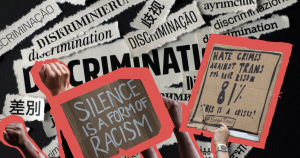
CCPA/Website
A Better Way Forward
I am not arguing that international students deserve praise. I am arguing that they deserve accuracy. They deserve to be understood as people, not symbols of political frustration. The conversation about immigration will always be complicated, but it needs to be based on facts instead of fear. Canada invited international students. Institutions benefited from them. Communities interacted with them. Pretending now that they are a national threat is not only unfair, it is intellectually dishonest.
The Point
International students are not the cause of national challenges. They are part of the communities they live in. They sit beside domestic students in classrooms. They work beside them in part-time jobs. They share the same streets, buses, and libraries.
The real question is not whether people like international students. The real question is whether people are willing to understand the difference between a policy decision and a person.
If we want a better conversation, it begins by choosing to think critically instead of repeating what we see online. That choice belongs to all of us.
SHARE



![Policemen stand guard in front of the Bangladesh Election Commission office ahead of the general election schedule announcement in Dhaka, Bangladesh, December 11, 2025 [Mohammad Ponir Hossain/Reuters]](https://thebaron.ca/wp-content/uploads/bb-plugin/cache/Screenshot-2026-01-23-at-9.48.54-AM-square-9f2b98d2eff6d31d5a83828c4d5ff7ce-.png "Screenshot 2026-01-23 at 9.48.54 AM")