There is a trend in global politics that becomes hard to ignore once you start paying attention to how certain leaders are discussed. In the mainstream media, certain individuals are nearly always shown as evildoers, autocrats, or dangers to international peace. However, those same individuals frequently have genuine fans who characterize them as social welfare givers, sovereignty defenders, or opponents of foreign dominance. An uneasy concern is raised by this discrepancy between the representation of leaders and their defence. Are these leaders just bad people, or is there more to the story?
The answer is not that supporters are always correct or that popular narratives are always incorrect. The explanation is that international politics, power, and governance do not cleanly fall into moral categories. Leaders can suppress dissent while implementing social projects. They can nonetheless violate human rights while fending off outside interference. They can modernize areas of a country while ruining others. If we wish to discuss world affairs in an honest rather than dogmatic manner, we must comprehend this tension.
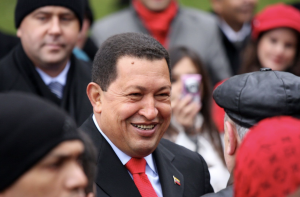
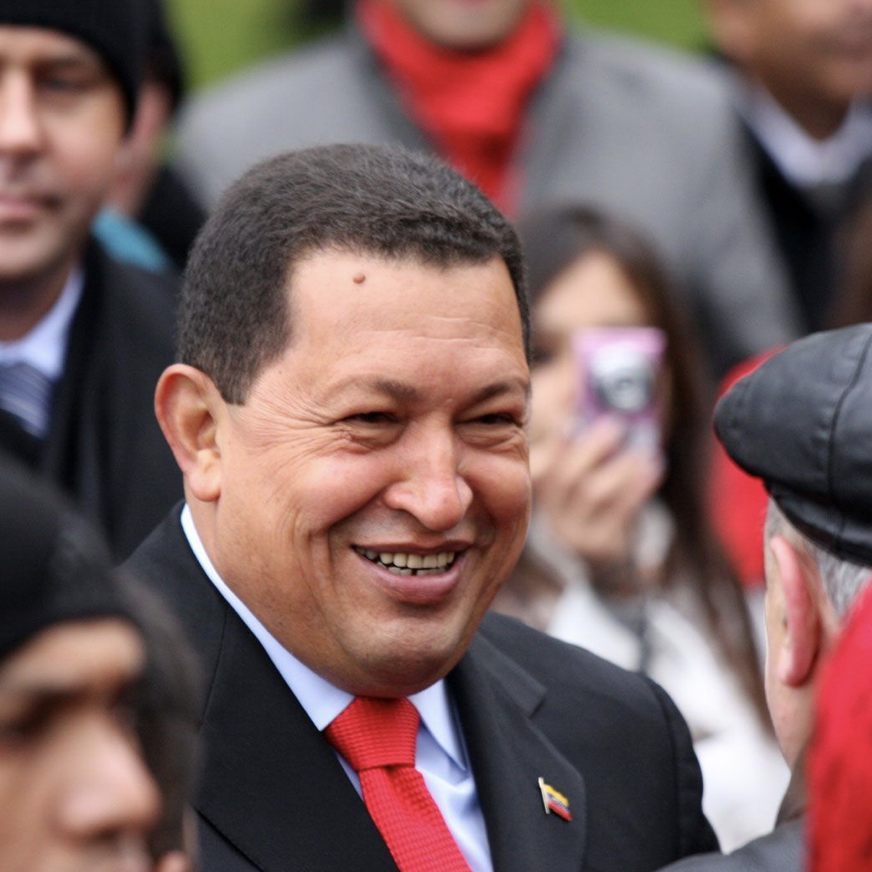
This conflict is seen in a wide range of political structures. Both Nicolás Maduro and Hugo Chávez are frequently seen globally as authoritarian populists who ruined Venezuela’s economy and weakened its democratic institutions. That criticism is backed up by a lot of facts. Under their direction, Venezuela saw enormous emigration, hyperinflation, shortages of essential products, and a catastrophic economic collapse. State power grew increasingly concentrated, and political opposition was progressively curtailed.
Google Photos
Simultaneously, Chávez implemented extensive social initiatives called the Misiones, which increased access to food, healthcare, and education in underprivileged areas that had previously been shut out of political life. Many Venezuelans had a sense of transformation from these programs, particularly in the early years. Along with regaining control over oil income and giving previously marginalized people a political voice, Chávez also contested American power in Latin America. Supporters took this very seriously.
Therefore, the fight in the story is between different truths rather than between truth and lies. Both Maduro and Chávez eliminated institutional checks and increased social welfare. They both resisted foreign pressure and stifled domestic resistance. All of these events occurred simultaneously.
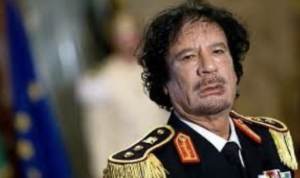
A similar contradiction can be found in the case of Muammar Gaddafi in Libya. Gaddafi’s Libya featured subsidized housing, free healthcare and education, and extensive infrastructure projects financed by oil profits. Poverty decreased, literacy increased, and the government made significant investments in public goods. In addition, he opposed Western economic domination and worked for Pan-African unification.
Google Photos
Gaddafi, however, also controlled by terror. He consolidated power in his own hands, stifled political opposition, and imprisoned or executed dissenters. Even though the upheaval that followed his removal was severe, authoritarian control is not retrospectively justified. It is possible for both realities to be true.
Gustavo Petro is a whole different story in Colombia. He advocates for progressive reforms like healthcare expansion, environmental justice, and peace talks with armed groups while working inside a democratic framework. Even if he is not an authoritarian leader, elites and global financial players continue to fiercely oppose him. This demonstrates how challenges to long-standing political and economic interests are viewed as destabilizing even in democracies.
One of the most obvious instances of why simplicity is ineffective is perhaps Saddam Hussein’s rule in Iraq. Iraq underwent modernization, greater educational opportunities, secular administration, and women’s rights throughout the early years of his leadership. These regulations were in place. However, Saddam also oversaw a ruthless dictatorship that engaged in widespread political repression, torture, mass murder, and genocide against Kurdish populations. His rule was not merely misinterpreted. It was autocratic and aggressive in ways that development initiatives cannot justify.
Ayatollah Khamenei’s Iranian government is frequently portrayed as a Western-hostile religious dictatorship. Supporters highlight Iran’s defiance of Western geopolitical control, its growth of its own sector while under sanctions, and its opposition to foreign dominance. Critics cite violations of human rights, censorship, repression, and a lack of democratic accountability. Once more, actual components of the system are reflected in both descriptions.
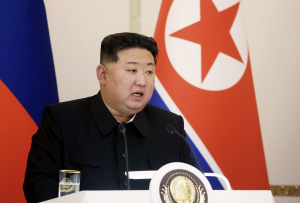
Nearly all portrayals of Kim Jong Un’s North Korea are of a closed, violent, totalitarian regime. There is nothing wrong with that framing. The nation has rampant human rights abuses, heavy surveillance, and harsh restrictions on freedom. Although there is a concept of self-reliance, it has no real bearing on the autonomy or well-being of regular people.
Google Photos
Another manifestation of this tension can be seen in Russia under Vladimir Putin. Putin is credited by many Russians with reestablishing national power, fortifying the state, and bringing stability following the fall of the Soviet Union. Critics refer to aggressive foreign policy, authoritarian consolidation, and repression of opposition as causes of hardship and war. Unquestionably, Putin has changed Russia, but political beliefs and personal experience will determine whether this change is seen as a restoration or a regression.
The fact that these cases are all part of a global system where power, legitimacy, and morality are continuously disputed, rather than the leaders themselves, is what unites them. Authoritarianism, repression, and war are frequently highlighted in Western media, particularly when leaders conflict with Western objectives. Supporters of these politicians frequently highlight social programs, resistance, and sovereignty, particularly when they believe their nations have traditionally been exploited or oppressed.
The complete tale is not told by either side alone. Mainstream narratives run the risk of simplifying complex civilizations into stereotypes and using them to defend isolation, sanctions, or foreign intervention without taking into account the full effects on people. Romanticized counter-narratives run the risk of justifying oppression, abuse, and violence in the name of anti-imperialism or sovereignty.
Both are held together by a more truthful analysis. Leaders are more than just intangible symbols. They are powerful individuals whose decisions affect millions of lives. These decisions have the potential to both raise education and lower poverty while stifling criticism. They can solidify inequity at home while also defying pressure from abroad. They can undermine accountability while fostering stability.
We must abandon the notion that presidents are either heroes or villains if we are to take international politics seriously. We must inquire as to what their policies truly accomplish, who gains and loses from them, and how authority is used. There is no distinction between good and terrible regimes in the world. It is separated into systems that allow accountability, share power, and shield individuals from abuse, and those that don’t. Recognizing that diversity is more crucial than supporting or criticizing any one leader because it compels us to consider not just who is in power, but also how they govern and the effects of their rule on the populace.



![Policemen stand guard in front of the Bangladesh Election Commission office ahead of the general election schedule announcement in Dhaka, Bangladesh, December 11, 2025 [Mohammad Ponir Hossain/Reuters]](https://thebaron.ca/wp-content/uploads/bb-plugin/cache/Screenshot-2026-01-23-at-9.48.54-AM-square-9f2b98d2eff6d31d5a83828c4d5ff7ce-.png "Screenshot 2026-01-23 at 9.48.54 AM")