Jonathan Bruce
READING TIME: 7 MINUTES
Sixtieth anniversaries are always a popular date to mark significant milestones. These could include people turning sixty or the anniversary of specific achievements. For music, however, the anniversaries of album releases are important because they showcase what certain sounds and influences had on consumers and fellow artists.
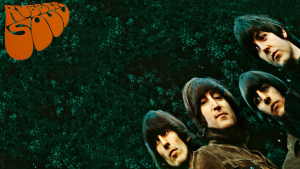
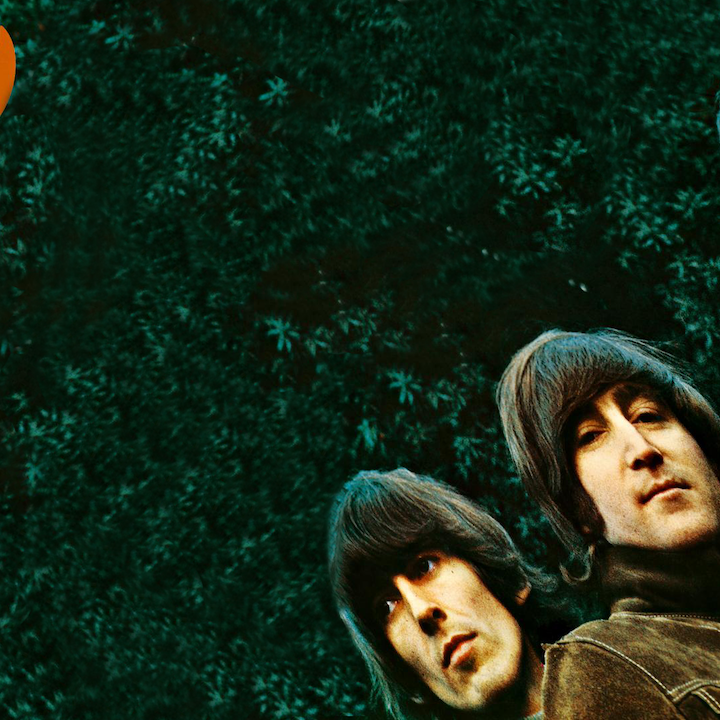
Released in mid-December 1965, the Beatles’ Rubber Soul album is celebrating its sixtieth anniversary among music lovers around the world. Having been written and recorded in the middle of Beatlemania, their sixth album proved to be a pivotal point in the Beatles’ saga, because it marked a more mature sound and influence. Produced by George Martin, it is the record that feels the most complete as a whole. Up until this point, their early albums had filler content and cover standards of other artists’ songs. Many music critics had pegged the Beatles as being cheap imitators of American groups and lacking their own authenticity. One might argue the group answered their naysayers via creating this album.
Apple Records
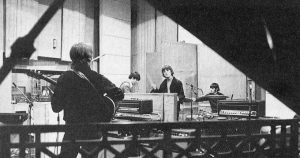
By 1965, John Lennon, Paul McCartney, Ringo Starr, and George Harrison were between the ages of 23 to 25. Lennon himself noted in interviews that the group was evolving in terms of their thoughts, feelings, and styles. The differences between a teenager and a twenty-something are quite clear, since the latter is more worldly and aware of life. As men, the band was ready to explore deeper themes and concepts. Recorded over a month-long period, Rubber Soul incorporates folk music with rock, pop, and even soul influences. The title itself is a parody of the colloquialism “plastic soul”, which was a critique of white artists producing soul music as an imitation of black music. Paul McCartney himself acknowledged the concept during the recording of non-album single “I’m Down”, referring to it as “Plastic soul, man. Plastic soul”. It also works as a clever pun on rubber soled shoes, which provides a nice bit of wry humour. Love is a primary focus of the album. Rather than adolescent love, the album focuses on the concept of love and what it does for individuals. Other primary themes on the record include uncertainty, directionless, and infidelity.
Rubber Soul kicks off the proceedings with the opening track “Drive My Car”. It is perhaps ranked up there on Lennon and McCartney’s best tracks with heavy led guitar parts and join lead vocal harmonies. Although it is primarily a McCartney brainchild, Lennon contributed to the lyrics, which concern an aspiring actress telling the narrator to be her chauffeur (hence the lyric, “Baby you can drive my car”). While Harrison didn’t write the lyrics, he was responsible for the group’s decision to use a dual guitar-bass riff in the vein of Otis Redding and other soul artists.
Apple Records
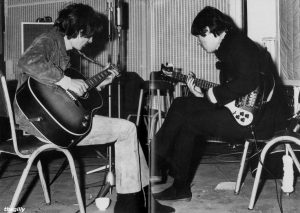
“Norwegian Wood (This Bird Has Flown)” is a song about infidelity. Lennon wrote about the lengths to which one might go in canceling an affair, which is conveyed in the lyrics about the speaker and a mysterious woman. The song is written in an English folk style and arranged in 12-8 time. It is also one of the first instances where the Beatles used the Indian sitar, which was a Harrison idea. Having guitars with a sitar makes for an interesting drone effect. A Mannborg harmonica is also prominent on the track, which gives it an unusual type of feel. The song is somewhat controversial among Beatles’ fans, since McCartney has claimed to have written the middle eight and added the fire segment. Yet that is a debate for another time.
“You Won’t See Me” concerns the problems within relationships, specifically the issue of miscommunication in couples. Written by McCartney, the song uses descending semitones on the E and B guitar strings. It is composed in the vein of a Motown type song. McCartney later acknowledged that he used the same chord structure from the Four Tops’ hit single, “It’s The Same Old Song”.
“Nowhere Man” is probably the most Bob Dylan-esque composition in the Beatles. Primarily composed by Lennon, the song doesn’t focus on love and instead concerns an aimless individual “sitting in his Nowhere land, making all his nowhere plans for nobody”. The titular character lacks direction, “doesn’t have a point of view”, and “Knows not where he’s going to”. Ultimately, there is no resolution within the song; the narrator acknowledges the universal feelings of “Isn’t he a bit like you and me?”. Composed in 32 bar form, the track is mostly written in E-major with B, A, G, and Am appearing at various times. “Nowhere Man” is also notable for Lennon playing both rhythm and lead guitar parts on the recording.
“Think For Yourself” is the first of three Harrison tracks on the album. It concerns the issue of forming one’s own consolations rather than succumbing to oppressive conformity by the masses. Harrison himself acknowledged that the idea was to discourage narrow-minded ways of thinking. The lyrics are left ambiguous, both encouraging independent thinking while appearing to rebuke or criticize a friend or lover. Some critics have argued that Harrison was inspired by Dylan’s “Positively 4th Street”, which is a protest song. Written in G major and G minor, Harrison’s lead vocal is one of his finest singing efforts, while McCartney provides a deep, satisfying baselines on the standard bass and the fuzzbox device.
“The Word” is one of Lennon’s most eclectic-sounding songs. It has influences from James Brown and Wilson Pickett, and the end result is an R&B type number with a proto-funk sound. It is penned in D major with D7 being the main chord, and it was the intention of Lennon and McCartney to do a song with few (if any) chord changes. Starr’s drumming is at the forefront with a variety of fills. As for the meaning, Lennon summed it up by saying “The word is love”, which showcases a desire for understanding and enlightenment.
“Michelle” is a McCartney ballad with segments sung in French. Performed in F, the lyrics focus on two lovers being divided by language barriers, and it is established from the outset that said relationship is doomed to collapse. The song’s narrator is looking back on what could have been and where things fell apart, much like the band’s earlier song “Yesterday”. While it was mostly a McCartney song, Lennon did make a lyrical contribution to the song’s bridge.
Apple Records
The second side of the album becomes even more eclectic in sounds and influences. “What Goes On” marks Starr’s first Beatles songwriting credit, which he composed alongside Lennon and McCartney. It is unique as the only Lennon-MCartney-Starkey song in the Beatles catalogue. Starr’s vocals are is done in a country style with Harrison providing rockabilly guitar influences. Not a bad showcase for the drummer’s easygoing delivery. “Girl” is a Lennon track that uses a Greek folk style with Beach Boys-style harmonies. McCartney’s “I’m Looking Through You” is jangly folk rock track with R&B instrumental segments. It concerns two lovers who are coming to terms with how they are changing and growing apart.
Perhaps the deepest, most introspective song on the album is “In My Life”. Primarily written by Lennon (with assistance from McCartney), the track is a mediative piece on nostalgia, friends and lovers, and the power of memory. “There are places I remember all my life/Though some have changed/Some forever and not for better/Some have gone, but some remain.” The song moves past mere locations to remembering particular individuals, whom the speaker notes, “Some are dead and some are living”. It brings to mind various loved ones the Beatles lost — such as Lennon’s mother Julia and McCartney’s mother Mary, as well as their late bassist Stuart Sutcliffe. During the middle eight, a Johann Sebastian Bach-inspired piano solo is played, which adds to the timelessness of the song. This interlude was the brainchild of George Martin, who composed the solo on piano and sped it up to sound like a harpsichord. One could argue the track should have been credited as Lennon/McCartney/Martin, which would make the most sense in a perfect world.
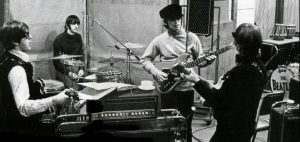
“Wait” is a Lennon song with the middle eight composed and performed by McCartney. The song features tone-pedal lead guitar playing and the use of a volume pedal. Apart from his drumming, Starr provides extra percussion with maracas and tambourine. The penultimate track is “if I Needed Someone”, which is a Harrison song written to his then-wife Patti Boyd. It uses a Rickenbacker 12-string guitar and penned in the vein of the Byrds’ songs. Penned in A major, the track incorporates both Mixolyndian harmonies and drone into the track. Most intriguingly, the song was the lone Harrison composition to be played live by the Beatles during their final concert tours. Rubber Soul concludes with the song “Run For Your Life”, which was a take on the Elvis Presley song “Baby Let’s Play House”. It is notable for being played in a country music style with Harrison contributing slide guitar and sending guitar riff. The track takes on a darker turn in which the speaker says to his lover, “I’d rather see you dead, little girl, than to be with another man”, which was also lifted from the Presley song. Lennon himself didn’t care much for “Run For Your Life” and later called it his least favourite Beatles song.
Apple Records
Overall, Rubber Soul remains one of the Beatles’ best works. Gone are the happy-go-lucky songs of adolescence and young love. What takes their place are tracks about love as an idea, feelings of aimlessness, critiques of narrow-minded ways of thinking, and the power of memory. It can be argued the the Beatles “grew up” by recording this album, and many of their post-1965 compositions would be more mature and nuanced. Sixty years on, Rubber Soul is one of the Beatles’ strongest efforts and still ranks highly among the best folk rock albums of all time.
SHARE


Good Night and Good Luck Delivers an Impressive, Intimate Look at The Media