Jonathan Bruce
READING TIME: 9 MINUTES
If someone utters the name “Jacob Elordi”, the words “tall, dark, and handsome” would probably come to mind. The lanky Australian actor with smouldering good looks launched his career with the HBO drama series Euphoria. He then landed the leading role of rich college kid Felix in 2023’s black comedy thriller Saltburn and Elvis Presley in Sofia Coppola’s biographical drama Priscilla. Most recently, he played the Creature in Guillermo del Toro’s Frankenstein, earning him an Academy Award for Best Supporting Actor. However, there has never been a feature film with Elordi as the leading man.
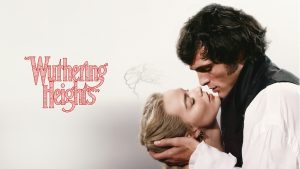
Until now, of course. That status quo is about to change with the new Warner Brothers romantic period drama film Wuthering Heights. Based on the classic 1847 novel by Emily Brontë, the movie is directed and written by Emerald Fennell (Promising Young Woman), who previously worked with Elordi on Saltburn. It marks the seventeenth feature adaptation of the book; joining the ranks of the famed 1939 film starring Lawrence Oliver and Merle Oberon, and the 1992 version with Ralph Fiennes and Juliette Binoche. The cast includes Elordi, Margot Robbie (Once Upon A Time In Hollywood), Hong Chau (The Whale), Martin Clunes, Shazad Latif, Alison Oliver, Ewan Mitchell, Charlotte Mellington, and Owen Cooper (Adolescence).
Warner Brothers
Set in the early late 1700s, the film opens in 1771 with young Catherine “Cathy” Earnshaw (Mellington) and Nelly Dean witnessing a public hanging. Cathy is the only daughter of Mr. Earnshaw (Clunes), the alcoholic owner of an estate on the Yorkshire Moors named Wuthering Heights. Nelly is the illegitimate daughter of an English lord who’s living with the Earnshaws as a paid companion to Cathy. When Earnshaw returns home, he brings an orphaned boy (Cooper) to serve as a playmate for his daughter. Cathy becomes protective of the boy and names him “Heathcliff” in memory of her late brother. She teaches him to read and write English, and the two develop a close friendship. When Cathy causes them to be late for Mr. Earnshaw’s birthday dinner, Heathcliff defends her by claiming responsibility for the mishap. This leads to his being beaten and left deeply scarred.
Ten years later, Cathy (Robbie) has grown into adulthood, and her father’s alcoholism has become even worse. Due to his debts from drinking and gambling, Wuthering Heights has become run down and even gloomier. Heathcliff (now played by Elordi) is still working on the estate as a stablehand. The arrival of new neighbour Edgar Linton (Latif) and his legal ward Isabella (Oliver) proves to be exciting news to Catherine, who hopes to meet and court him. Cathy’s plan is to marry Edgar, leave Wuthering Heights for good, and help bring Heathcliff into high society. Privately, Heathcliff is deeply jealous and does not like the idea of Cathy marrying Edgar. While spying on Edgar and Isabella, Cathy falls and sprains her ankle, prompting the neighbours to take her in to recuperate at their estate, Thrushcross Grange. Over the course of six weeks, Edgar becomes infatuated with her and proposes marriage, to which she agrees.
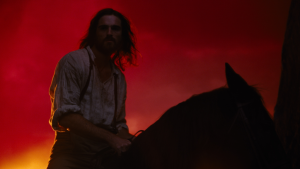
Upon returning to Wuthering Heights, Cathy makes the engagement official, while Heathcliff is disdainful and remains aloof. Later, he seeks out Cathy and has a moment of passion, but she rejects him when he tries to kiss her. In private, Cathy confides to Nelly (Chau) in feeling guilty about having to choose Edgar over Heathcliff, because the latter is poor and has no social prospects. Unbeknownst to Cathy, Heathcliff is standing outside the door and hears her words, but he leaves before she admits that their souls have become intertwined. He rides off on a horse and disappears for places unknown, seemingly gone forever.
During the following year, Cathy and Edgar marry and live comfortably at Thrushcross Grange. Cathy comes to discover that Isabella seems very obsessed with her, even to the point of making dolls in her likeness with her actual hair. Despite her new wealthy lifestyle, she misses Heathcliff and wishes that he would come back. Four years later, Cathy discovers she is pregnant with a child. Just then, Heathcliff returns in the style of a gentleman. It transpires that he has somehow acquired a fortune and plans to buy Wuthering Heights for himself. While Cathy is delighted to see him, he remains frosty and bitter over her choice to marry Edgar. Evidently, Heathcliff has not gotten over Cathy or the words he overheard her saying.
Heathcliff buys the Wuthering Heights estate, and Mr. Earnshaw dies not long afterwards. Meanwhile, Isabella is becoming intrigued with Heathcliff, which leaves Cathy concerned. This leads to an argument between the two women culminating in Cathy describing why Heathcliff is not good for Isabella. Cathy and Heathcliff begin a secret sexual affair ranging over the next several months, conducted in brief, clandestine meetings. Upon learning that Nelly knew about Heathcliff’s eavesdropping, Cathy erupts in fury and tries to banish her from Thrushcross Grange. In response, Nelly tells Edgar about the affair, prompting him to forbid Cathy from seeing Heathcliff again. Going against her husband’s wishes, Cathy reveals her pregnancy and has a final tryst with Heathcliff before sending him away. In retaliation for the rejection, Heathcliff marries Isabella and begins an emotionally abusive, loveless BDSM relationship with her. Isabella is aware of the arrangement and understands her partner’s motivations. Over time, Heathcliff’s treatment of Isabella escalates and becomes even more physically and emotionally abusive. Meanwhile, Cathy is becoming ill over Heathcliff marrying Isabella. The question remains: how and will these two individuals address their feelings?
Elordi proves himself a compelling lead actor in the role of Heathcliff. Tall, imposing, and somber, he manages to take the part and make it unique. For the first half hour of his screen time, the actor sports long hair and a scraggly beard to depict Heathcliff’s status as a stableboy. He has a unique physicality to the role, especially in climbing atop walls and working with horses. Rather than emulate Lawrence Olivier’s brooding performance, Elordi plays the character as quiet and introverted in the film’s first act. When he does lash out, it is both unsettling yet compelling to watch. The loveless BDSM arrangement and uneven power dynamics are disturbing to behold, because Elordi is larger and much stronger than his scene partner. Some viewers and readers have labelled Heathcliff as “the hero” of the story, but it is clear they have missed the point Brontë was trying to make about the character.
Warner Brothers
Margot Robbie brings a strong-willed passion and sense of urgency to Cathy. She commands the screen and holds her own next to Elordi. Despite being slightly older than the literary Cathy, Robbie is still believable in wanting to elevate her social status while feeling conflicted in choosing between Heathcliff or Edgar. Her most effective movements are when deciding who or what she wants to become. The character’s uncertainty adds an authentic quality to Robbie’s performance, and it makes her even more relatable to viewers. The actress also succeeds in making Cathy seem cold and austere at times, such as when she attempts to banish Nelly from the household. This film demonstrates why Robbie is one of the best actresses working in Hollywood today.

Warner Brothers
The rest of the cast does well in their roles. Martin Clunes depicts Mr. Earnshaw as being a grieving widower with alcoholism and anger issues. His cruel treatment of Heathcliff is unsettling to watch, and it is not hard to see how such abuse could shape Heathcliff’s character in adulthood. Hong Chau portrays Nelly as a quiet yet astute woman who’s not afraid to make moves of her own. Perhaps her most compelling moment comes when she attempts to sabotage Heathcliff and Catherine’s relationship by withholding key information from the latter’s knowledge. It is not a dramatic scene with speeches or scene-chewing; rather, her quiet intensity is what sells the realism. Shazad Latif brings an amiable charm to Edgar, and one cannot help but empathize with his frustration over Cathy’s behaviour. In some ways, Latif’s Edgar comes off as somewhat pathetic in being cuckolded by his wife, but still manages to hold the viewer’s sympathy. Perhaps the saddest performance is that of Alison Oliver as Isabella, who is reduced to being the recipient of Heathcliff’s physical and emotional abuse. It is troubling to watch, because this is a woman being dominated by a cruel man who doesn’t even love her. Charlotte Mellington echoes Robbie by depicting the young Cathy as a flighty, driven girl, and the strong resemblance to her older counterpart is quite remarkable. Finally, Owen Cooper delivers a somber, nuanced performance as the boy Heathcliff. Already known for his starring role on Netflix’s Adolescence, the actor injects an air of vulnerability into his performance and promotes sympathy towards Heathcliff. Unlike his previous role as a child murderer, Cooper is heartbreaking to watch as he endures abuse and neglect. With this film being his cinema debut, one can only hope that Cooper will continue to hone his craft and skills while avoiding being typecast as damaged, troubled youths.
As is common in Hollywood, the director has taken some artistic liberties with the source material. Fennell has been adamant about not wanting to do a complete adaptation of Brontë’s novel, which ranges from 300 to 400 pages (depending on the edition). She stated in interviews that her goal was to “try and recreate the feeling of a teenage girl reading this book for the first time”. As a result, Fennell has chosen to focus on Heathcliff and Catherine’s turbulent relationship and not depict the generational aspect of the book. For this reason, Catherine’s older brother Hindley has been cut from the film, and the secondary characters of Hareton, Cathy (Catherine’s daughter), and Linton (Heathcliff’s son) have been omitted. Despite being in the book, Mrs. Earnshaw is written out as having died some years prior to the film’s opening. However, despite the changes, some of Hindley’s cruel traits have been transferred over to Mr. Earnshaw, particularly in his abusive treatment of Heathcliff. Nevertheless, the omission of Mrs. Earnshaw and the next generation does feel like a sad loss to Brontë fans, but it should be remembered that other adaptations of Wuthering Heights (like the 1939 version) have taken similar liberties as well.
There has been some controversy over the film’s casting Elordi as Heathcliff. In the novel, the character is described as being a “Lascar” and “dark-skinned gypsy” at various points, yet he is also said to be “pale” and “as white as the wall behind him”. This has resulted in many writers and critics viewing him as possibly being Romani and thus an embodiment of racial “otherness” in Brontë’s narrative. Fennell defended the casting by claiming she chose Elordi based on his resembling an illustration of Heathcliff in one of the novel’s editions that she read. While Heathcliff’s ethnicity is never made clear, the character is considered to be racially ambiguous, adding to the novel’s themes of race and class. Elordi is Australian with Spanish ancestry; his father immigrated from Spain years prior to his son’s birth. Regardless of the controversy, it stands to reason that there was a missed opportunity to cast an actor of colour as Heathcliff.
With regard to production values, Wuthering Heights is quite an impressive cinematic accomplishment to behold. Fennell has chosen to film the movie in the Yorkshire Dales, which makes for an appropriate decision. The locations include the valleys of Arkengarthdale and Swaledale, as well as the Yorkshire Dales National Park and the town of Low Row. In some ways, this adaptation comes closest to capturing the bleak desolation of the Yorkshire Moors as is depicted in Brontë’s novel. Linus Sandgren’s cinematography work keeps a close focus on the actors’ performances while keeping the details and setting of the period in the background. Editor Victoria Boydell keeps the film moving at a brisk pace, but it never feels overlong or bogged down with a running time of 136 minutes.

Warner Brothers
Music is also a major part of the film. Singer-songwriter Charli XCX has created a film score to capture the world that Fennell sought to create. The score is a mixture of gothic rock, pop, neoclassical dark wave, and industrial music, with comparisons to rock bands Nine Inch Nails and the Velvet Underground. Listeners can hear elements of noise and ambient sounds interpolated throughout the score, which adds to the sweeping, orchestral atmosphere in the film. Particular praise must be drawn towards the single “House”, which does come off as being similar to Trever Reznor’s work. Another track, “Chains of Love”, is a mixture of classical music and synth-pop, and brings to mind Charli’s own song catalogue. Some critics have drawn comparisons between the score and the artist’s debut album True Romance, to which she herself has confirmed.
Overall, Wuthering Heights is a compelling take on Brontë’s novel. Fennell has delivered an interesting yet unnerving depiction of a romance gone toxic. Elordi, Robbie, Chau, Latif, Clunes, and Cooper all turn in dramatic performances. The production design, cinematography, and music are all compelling. One can expect this film will be nominated in some, if not all, categories at the 2027 Academy Awards. Four out of four stars.
SHARE



Good Night and Good Luck Delivers an Impressive, Intimate Look at The Media